How to Handle Your Child’s First Day of School
Prepare for your child's first day of school with practical tips and comforting strategies to ease their transition and build confidence.


In this article
Key takeaways
- Plan a comforting morning routine
- Communicate openly about feelings
- Practice separation gradually
The first day of school is a significant milestone in your child’s life. It’s a day filled with emotions, excitement, and sometimes anxiety. As a parent, you want to ensure that your child feels supported and prepared for this new adventure. Understanding how to navigate this transition can make a world of difference for both you and your child.
Every child is unique, and their reactions to starting school can vary widely. Some may leap into this new experience with joy, while others might feel overwhelmed. Your role is to cultivate a nurturing environment that fosters confidence and security. In this article, we will explore practical strategies to help you and your child manage the first day of school effectively.
From setting up a comforting routine to understanding their emotions, you’ll find a comprehensive guide to ease this transition. Let’s dive into the essential steps to ensure a smooth start for your child.
Preparing Your Child for the First Day
Preparation is key to ensuring that your child feels ready and excited for their first day. Start by discussing what school will be like. Use books or videos about school to familiarize them with the concept. This helps in setting realistic expectations and alleviating any fears they may have.
Another effective strategy is to visit the school beforehand if possible. Walk around the campus, point out important areas like the classroom, restrooms, and playground. This familiarity can help ease anxiety on the actual first day. Also, consider having a playdate with a future classmate to build connections before school starts.
Additionally, establish a routine leading up to the first day. This can include waking up at the same time, practicing the morning routine, and preparing their school supplies together. Involving your child in these preparations can make them feel more in control and excited about starting school.
Creating a Positive Mindset
Encouraging a positive mindset about school can significantly impact your child’s experience. Talk openly about their feelings and validate their emotions. If your child expresses fear, discuss it openly and reassure them that these feelings are normal. This promotes emotional intelligence and resilience.
Use positive language when discussing school. Instead of focusing on what they might miss at home, highlight the fun experiences they will have, like making new friends and learning new things. You can say things like, “You’ll get to play with new friends and learn about exciting topics!”
Consider implementing a reward system for milestones leading up to the first day. Small rewards can motivate your child and provide them with something to look forward to. This could be as simple as a sticker chart for every successful day of preparation.
Establishing a Routine for the First Day
On the first day of school, having a routine can provide your child with a sense of security. Start the morning with a calm and positive atmosphere. This could involve a special breakfast or a brief family meeting to discuss the day’s events. Setting the tone for the day positively can help ease any lingering anxiety.
Ensure that all supplies are ready the night before. This includes packing their lunch, laying out their clothes, and gathering school materials. Having everything in place can minimize morning chaos, making the experience smoother for both you and your child.
On the way to school, discuss the day ahead again. Ask them what they are most excited about and what they might be nervous about. Encourage them to express their feelings, and reassure them that it’s okay to feel a mix of emotions.
Separation Strategies
Separation can be one of the most challenging aspects of a child’s first day of school. Prepare your child for this by practicing short separations before the big day. This could involve leaving them with a trusted friend or family member for a few hours. This practice can help your child get used to being away from you.
On the first day, keep goodbyes brief and positive. Prolonging the farewell can heighten anxiety for both you and your child. A quick hug, a cheerful wave, and a reassuring smile can help your child feel secure as you leave. Remind them that you will be back to pick them up at the end of the day.
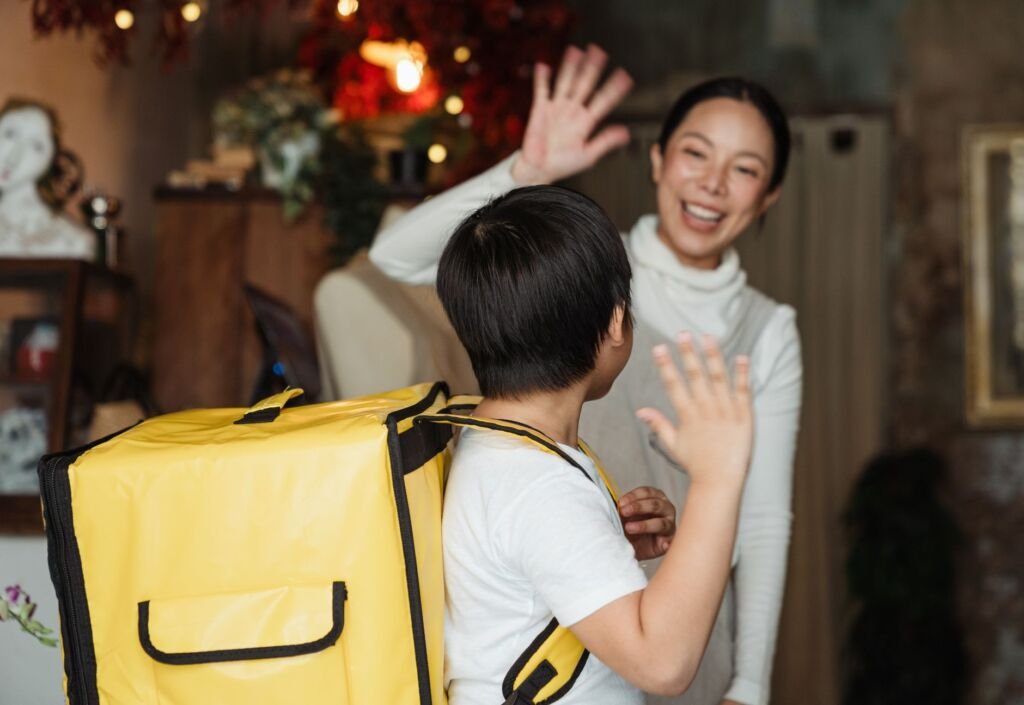
Consider establishing a special goodbye ritual that you can do each time you drop them off. This could be a secret handshake or a special phrase that you repeat together. This can give your child something to look forward to and makes the goodbye feel more special.

Encouraging Communication
After the first day, encourage your child to share their experiences. Ask open-ended questions like, “What was your favorite part of the day?” or “What did you learn today?” This not only helps you gauge how they are feeling but also reinforces their ability to communicate their thoughts and feelings.
Validate their experiences, whether they are positive or negative. If they share something troubling, listen without judgment and offer support. It’s essential for them to feel heard and understood. Encourage them to talk about their feelings and reassure them that it’s okay to feel nervous or scared.
Keep the lines of communication open. Regularly check in with your child about their school experiences. This helps them feel supported and allows you to address any concerns early on.
Building Friendships
Friendship development is a crucial aspect of your child’s social skills. Encourage your child to make friends by discussing the importance of being friendly and approachable. Role-play different scenarios where they might meet new classmates. This practice can help them feel more prepared to engage with others.
Arrange playdates with classmates to help your child build connections outside of school. This can foster friendships and make the school environment feel more familiar and welcoming. Additionally, being part of a group can help children feel more secure in their new surroundings.
Be proactive in communicating with your child’s teacher. Teachers can often offer insights into your child’s social interactions and can facilitate connections with other students. Don’t hesitate to reach out and express any concerns you may have regarding your child’s social adjustment.
Monitoring Progress and Emotional Well-Being
As your child settles into school, it’s important to monitor their emotional well-being. Keep an eye out for any changes in behavior that might indicate stress or anxiety. This could include withdrawal from activities they previously enjoyed or increased moodiness.
Engage in regular conversations about how school is going. Encourage your child to express any worries they may have and reassure them that it’s normal to feel overwhelmed at times. Be patient and understanding, as it may take some time for them to adjust fully.
If you notice persistent signs of distress, consider reaching out to a pediatrician or school counselor for additional support. They can provide strategies and resources tailored to your child’s needs.
Celebrating Achievements
Taking the time to celebrate small milestones can significantly boost your child’s confidence. After a successful first week, plan a fun family activity to recognize their achievements. This could be a movie night, a special dinner, or an outing to their favorite park.
Encourage your child to share their successes, no matter how small. This reinforces their sense of accomplishment and helps build resilience. Celebrating their experiences cultivates a positive association with school and learning.
Additionally, consider creating a visual chart to track their progress and achievements. This can serve as a tangible reminder of their successes and motivate them throughout the school year.

Understanding the School Environment
Familiarizing Your Child with the School Layout
Before the first day of school, it is beneficial for your child to become acquainted with the physical environment of their school. Visiting the school together can alleviate anxiety and help build excitement about their new adventure. Walk through the main entrance, visit their classroom, and check out other important areas such as the cafeteria, library, and playground. This helps your child visualize where they will spend their day and can lessen feelings of uncertainty.
Consider creating a simple map or checklist of key areas in the school. You can include:
- Main office
- Classroom
- Cafeteria
- Restrooms
- Library
- Playground
This activity can be a fun way to engage your child and prepare them for what to expect.
Discussing School Rules and Expectations
Every school has its own set of rules and expectations that help maintain a positive learning environment. Discussing these with your child can help them understand what is expected of them. You can find information about school rules on the school’s website or in the parent handbook. If available, review these documents together.
Key topics to cover might include:
- How to behave in class
- Interacting with teachers and peers
- Using school property responsibly
- Emergency procedures and safety rules
Encourage your child to ask questions about anything they find confusing, which can foster a sense of ownership over their learning experience.
Building Friendships Before School Starts
Encouraging your child to connect with future classmates before the first day can help ease their transition. Arrange playdates or group activities with children from the same school or class. This can foster friendships that will provide emotional support on the first day.
You can facilitate these connections by:
- Joining local parenting groups or school forums
- Organizing small gatherings before school starts
- Encouraging your child to invite friends over
Having familiar faces in the classroom can make the transition smoother and more enjoyable for your child.
Creating a Support Network
Engaging with Teachers and Staff
Establishing a positive relationship with your child’s teachers and school staff can significantly benefit your child’s experience. Make an effort to introduce yourself during orientation or the first day of school. A warm introduction can set the tone for open communication throughout the school year.
To foster a good relationship, consider:
- Participating in school events and parent-teacher meetings
- Sending a brief note to the teacher about your child’s interests and any concerns you have
- Being approachable and available for discussions
This engagement can help teachers understand your child better, leading to a more supportive learning environment.
Connecting with Other Parents
Building a rapport with other parents can create a support system for you and your child. It can be beneficial to share experiences, resources, and advice. Consider joining a parent-teacher association (PTA) or participating in school volunteer opportunities to meet other parents.
You might want to:
- Organize a parent meet-and-greet
- Exchange contact information with parents of your child’s classmates
- Share school-related resources and tips through social media or group chats
This network can provide emotional support as you navigate the challenges of parenting in the school setting.
Utilizing Community Resources
Many communities offer resources to support families during the transition to school. These may include programs, workshops, or counseling services that can assist both parents and children. Research what is available in your community and consider taking advantage of these resources.
Helpful resources may include:
- Local parenting workshops
- Support groups for parents
- School counseling services
- Library programs for children
Utilizing these services can provide additional support for your family during this important time.
Managing Separation Anxiety
Recognizing Signs of Anxiety
It is common for children to experience separation anxiety, especially on their first day of school. As a parent, it’s essential to recognize signs of anxiety, which may include clinginess, tantrums, or physical complaints like stomachaches. Understanding these signs can help you respond appropriately and provide the necessary comfort.
To help your child cope, you can:
- Validate their feelings and reassure them that it is normal to feel nervous
- Encourage them to express their thoughts and feelings
- Share your own experiences with anxiety and how you managed it
These conversations can help your child feel more understood and less alone in their feelings.
Establishing Goodbye Rituals
Creating a special goodbye ritual can help ease the transition and provide your child with a sense of security. This can be a simple gesture, such as a special hug or a secret handshake. Rituals give children something to look forward to and can make saying goodbye less daunting.
Some ideas for goodbye rituals include:
- Sharing a favorite quote or affirmation
- A quick game or silly dance
- Leaving a small token, such as a note or charm, in their backpack
These rituals can create positive associations with school and help your child feel more comfortable separating from you.
Encouraging Independence
Fostering independence in your child can also help reduce anxiety related to separation. Encourage them to perform small tasks independently, such as dressing themselves, packing their school bag, or making simple decisions. The more competent they feel, the more confident they will be when facing new situations.
To promote independence, try:
- Setting up age-appropriate chores
- Allowing them to choose their outfits
- Encouraging them to invite friends for playdates
This approach can help build resilience and prepare them for the challenges they may face in school.
Related reading: Signs Your Toddler Is Ready for Potty Training and Establishing a Healthy Sleep Routine for Your Baby.
Trusted sources: HealthyChildren.org (American Academy of Pediatrics), HealthyChildren.org: Toddler.
Frequently Asked Questions
How can I help my child if they are anxious about starting school?
Listen to their concerns and validate their feelings. Encourage open communication and practice separation gradually. Engage them in discussions about school to familiarize them with the environment.
What should I do if my child is having difficulty adjusting?
Monitor their emotional well-being and maintain open lines of communication. If difficulties persist, consider reaching out to their teacher or a pediatrician for support and resources.
How can I make the first day special for my child?
Consider planning a special breakfast or creating a memorable morning ritual. Take photos to commemorate the day and celebrate their transition into this new phase of life.
What are some signs that my child may need additional support?
Watch for changes in behavior, such as withdrawal from activities, increased moodiness, or difficulty sleeping. If these signs persist, consult a pediatrician or counselor for guidance.
The Bottom Line
The first day of school marks a significant transition for both you and your child. By preparing adequately, fostering open communication, and celebrating milestones, you can help your child navigate this new experience with confidence. Each child’s journey is unique, and your support plays a crucial role in their success. Remember, with patience and encouragement, this transition can be a positive and enriching experience for the entire family.
Was this article helpful?
Thanks for letting us know! Your feedback helps us make our articles better.

Writer at Apparently a Parent, covering the everyday joys and challenges of raising a family.




One Response