Educational Toys That Grow With Your Child’s Development
Discover how educational toys can evolve with your child’s development, fostering learning and creativity at every stage.


In this article
Key takeaways
- Educational toys adapt to different learning stages.
- Investing in versatile toys saves money long-term.
- Choose toys that encourage creativity and critical thinking.
- Safety and educational value are paramount in toy selection.
As a parent, you want the best for your child, and that includes providing them with toys that not only entertain but also educate. Educational toys are a fantastic way to spark your child’s curiosity and foster their development. However, the challenge lies in selecting toys that will grow with your child, allowing them to learn and explore as they reach new developmental milestones. This guide will walk you through the essential aspects of choosing educational toys that can adapt to your child’s evolving needs.
In today’s market, the options for educational toys are vast, ranging from simple blocks to intricate science kits. Each toy has the potential to stimulate your child’s cognitive, emotional, and social skills, making it crucial to choose wisely. Understanding the different stages of child development can help you make informed decisions that align with your child’s interests and growth.
Whether you’re a first-time parent or have multiple children, remember that every child is unique. What works for one may not resonate with another. This guide aims to provide a comprehensive overview to help you navigate the world of educational toys effectively.
Understanding Child Development Stages
Before diving into the types of educational toys available, it’s essential to understand the different stages of child development. Each stage presents unique opportunities for learning and exploration. The American Academy of Pediatrics emphasizes the importance of play in childhood development, highlighting how play contributes to cognitive skills, social skills, and emotional resilience.
Here’s a brief overview of the key developmental stages:
- Infants (0-12 months): At this stage, sensory exploration is critical. Toys that engage sight, sound, and touch are ideal. Think rattles, soft toys, and colorful books.
- Toddlers (1-3 years): Toddlers are naturally curious and love to explore. Toys that encourage problem-solving, such as stacking blocks or simple puzzles, can be beneficial. They also enjoy imaginative play, which can be sparked by dolls or playsets.
- Preschoolers (3-5 years): During this phase, children begin to engage in cooperative play. Educational toys like art supplies, building sets, and interactive learning tools can support their growing social and cognitive skills.
- School-age children (6-12 years): These children benefit from toys that challenge their critical thinking and creativity. Science kits, board games, and technology-based toys can keep them engaged and learning.
The Importance of Play
Play is not just about fun; it’s a vital part of your child’s development. According to a report by the World Health Organization, play helps children engage with the world around them, develop essential life skills, and build emotional strength. Educational toys can enhance this experience by providing opportunities for learning through play.
For example, toys that promote problem-solving encourage children to think critically and creatively. Engaging in play with educational toys can also help your child develop social skills as they interact with peers or family members. Remember, the goal is to find toys that are not only educational but also enjoyable, making the learning process a natural and fun experience.
Types of Educational Toys
Now that you understand the stages of development, let’s explore the different types of educational toys available. Each category serves a unique purpose and can cater to various interests and skills.
1. Building and Construction Toys
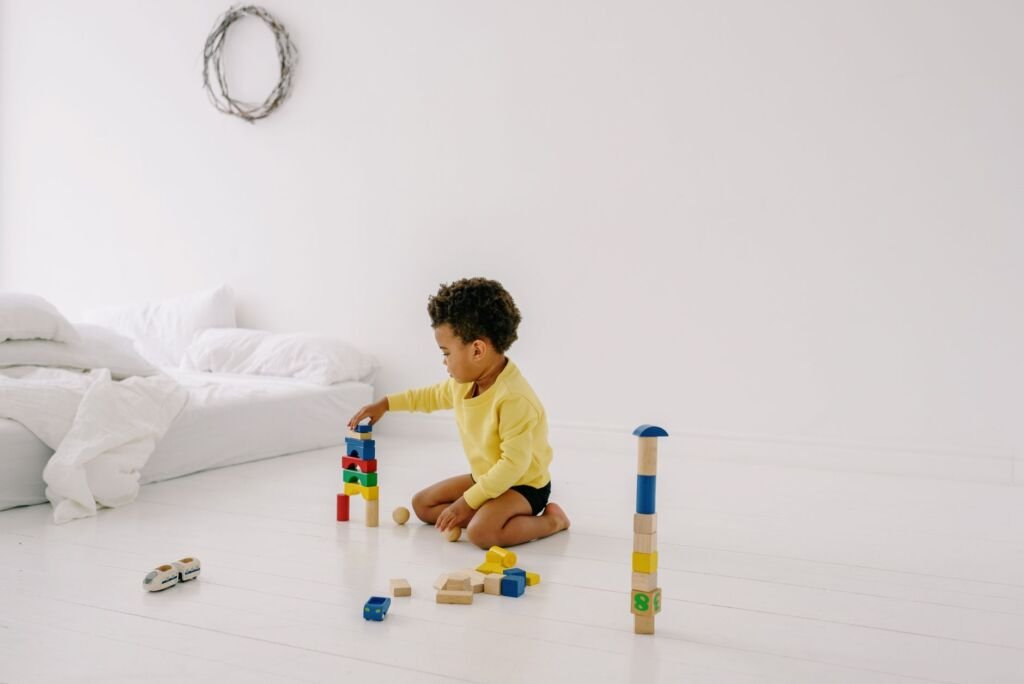
Building and construction toys, like blocks and LEGO sets, are fantastic for developing spatial awareness and fine motor skills. These toys encourage creativity as children design and build structures, fostering their imagination. They can be used by children of various ages, making them a long-lasting investment.
- Benefits: Enhances problem-solving skills, boosts creativity, and improves hand-eye coordination.
- Examples: Wooden blocks, LEGO sets, magnetic tiles, and construction kits.
- Age Range: Suitable for toddlers through school-age children.
2. Arts and Crafts Supplies
Arts and crafts supplies are essential for nurturing your child’s creativity and self-expression. These materials inspire children to use their imagination, develop fine motor skills, and learn about colors and shapes. From coloring books to clay and paint, the options are endless.
- Benefits: Encourages creativity, improves motor skills, and enhances emotional expression.
- Examples: Crayons, markers, paints, clay, and various craft kits.
- Age Range: Suitable for toddlers through school-age children.
3. Science and Educational Kits
Science kits and educational toys can ignite a passion for learning in young minds. These toys often come with experiments or projects that teach children about scientific concepts while keeping them engaged. They can be tailored to various age groups and cover topics such as chemistry, biology, and physics.
- Benefits: Encourages curiosity, critical thinking, and hands-on learning.
- Examples: Chemistry sets, nature exploration kits, and robotics kits.
- Age Range: Generally for preschoolers through school-age children.
4. Interactive Learning Tools
In today’s digital age, interactive learning tools can play a crucial role in education. Tablets and smart toys that feature educational apps can enhance learning through engaging content. However, it’s essential to monitor screen time and ensure that these tools complement traditional play.
- Benefits: Engages children with interactive content, reinforces learning, and provides instant feedback.
- Examples: Educational tablets, smart robots, and interactive storybooks.
- Age Range: Suitable for toddlers through school-age children.
5. Board Games and Puzzles
Board games and puzzles are excellent for developing critical thinking and social skills. They encourage children to think strategically, learn to follow rules, and improve their patience and cooperation skills. Many games cater to various age groups, ensuring that everyone in the family can join in on the fun.
- Benefits: Enhances social interaction, improves cognitive skills, and teaches patience.
- Examples: Classic board games, card games, and age-appropriate puzzles.
- Age Range: Generally for preschoolers through school-age children.

Choosing the Right Educational Toys
Selecting the right educational toys requires careful consideration. Here are some practical tips to guide your decision-making process:
1. Consider Safety First
Safety should always be your top priority when choosing toys for your child. Ensure that the toys meet safety standards and are age-appropriate. Look for non-toxic materials and avoid small parts that could pose a choking hazard for younger children. The American Academy of Pediatrics provides guidelines and resources for safe toy selection. You can visit their site for more information.
2. Match Toys to Your Child’s Interests
Every child has unique interests and preferences. Observe what excites your child and choose toys that align with those interests. If your child loves animals, for instance, consider educational toys related to wildlife or nature. This personal connection to the toy enhances learning and engagement.
3. Look for Versatility
Investing in versatile toys that can be used in multiple ways can save money in the long run. For example, a set of building blocks can be used for stacking, sorting, and imaginative play as your child grows. Look for toys that can adapt to different learning stages or play scenarios.
Tips for Maximizing Playtime
Once you’ve selected the right educational toys, here are some tips to maximize your child’s playtime experience:
- Engage with Your Child: Participate in playtime to model how to use the toys effectively. This interaction can enhance learning and create lasting memories.
- Encourage Imaginative Play: Allow your child to use the toys in creative ways. This fosters independence and critical thinking as they explore different scenarios.
- Rotate Toys Regularly: To keep your child engaged, rotate the toys every few weeks. This strategy can renew interest and excitement in playtime.
Always supervise your child during playtime to ensure safety and encourage learning.
The Role of Imaginative Play in Child Development
Imaginative play, also known as pretend play, is a critical aspect of childhood development that allows children to explore their creativity and develop social skills. Educational toys that encourage imaginative play can significantly enhance cognitive growth, language skills, and emotional understanding. As children grow, their imaginative play evolves, making it essential to choose toys that adapt to their changing needs.
Types of Imaginative Play
- Role-Playing: Children mimic adults and create scenarios, enhancing their understanding of social roles.
- Creative Storytelling: Toys that promote storytelling, such as puppets and dolls, help develop language and narrative skills.
- Artistic Expression: Art-based toys encourage self-expression, fostering creativity and fine motor skills.
Role-playing is one of the most common forms of imaginative play. Children often engage in activities where they act out different roles, such as a doctor, teacher, or parent. This type of play helps them understand various societal functions and enhances their empathy and communication skills. Toys like doctor kits, kitchen sets, and dress-up clothes can facilitate this kind of imaginative engagement.
Creative storytelling toys, including puppets and plush characters, allow children to craft narratives and develop their verbal skills. This type of play encourages children to think critically, organize their thoughts, and express their emotions effectively. Such toys can be incorporated into group play, fostering collaboration and social interaction among peers.
Artistic expression through toys like coloring books, modeling clay, or musical instruments enables children to communicate their feelings and ideas visually or audibly. This form of play is crucial for developing fine motor skills and can be an excellent outlet for emotions.
Choosing Toys That Encourage Imaginative Play
When selecting toys that foster imaginative play, consider the following criteria:
- Open-Ended: Toys that can be used in various ways stimulate creativity.
- Age-Appropriate: Ensure the toy is suitable for your child’s developmental stage.
- Durability: Toys should withstand frequent use and be safe for children.
Open-ended toys, such as building blocks and art supplies, allow children to create their own play scenarios, promoting innovative thinking. Age-appropriate toys are crucial for keeping children engaged and challenged, as toys that are too advanced may lead to frustration, while those too simple may cause boredom. Finally, durability is essential, as active play can be rough on toys, and safety should always be a priority, ensuring that materials are non-toxic and age-appropriate.

Integrating STEM Learning Through Play
STEM education, science, technology, engineering, and mathematics, has gained prominence in early childhood education. Incorporating STEM-focused educational toys into a child’s playtime can spark an interest in these fields from a young age. The best STEM toys are not only engaging but also promote problem-solving, critical thinking, and hands-on learning.
Types of STEM Toys
- Building Sets: Encourage spatial awareness and engineering skills.
- Science Kits: Promote curiosity about the natural world.
- Robotics: Introduce programming concepts in a fun manner.
Building sets, such as LEGO or magnetic tiles, are fantastic for developing spatial awareness and engineering skills. These toys challenge children to think critically about how to construct various structures and can be used to create both simple and complex designs. They also encourage collaboration and sharing when children work together to build projects.
Science kits provide hands-on experiments that engage children’s curiosity about the world around them. These kits can range from simple chemistry sets to plant-growing kits, fostering a love for natural sciences and experimentation. Engaging in these activities can lead children to ask questions and seek answers, which is a fundamental aspect of scientific inquiry.
Robotics toys, which often combine building and programming, introduce complex concepts in an accessible way. These toys help children develop logical thinking and problem-solving skills while making learning fun. Many robotics kits come with user-friendly interfaces that allow children to code their robots, reinforcing computational thinking.
Benefits of STEM Toys
STEM toys offer several benefits that can positively impact a child’s development:
- Enhance Critical Thinking: Children learn to analyze problems and devise solutions.
- Promote Collaboration: Many STEM activities are best enjoyed in groups, encouraging teamwork.
- Set the Foundation for Future Learning: Early exposure to STEM concepts can lead to greater interest and success in these fields later in life.
Engaging with STEM toys enhances critical thinking skills by challenging children to analyze problems and work through solutions systematically. These toys often require children to collaborate, encouraging social skills and teamwork, which are vital for success in both academic and professional environments. Additionally, early exposure to STEM concepts can inspire long-term interest in these critical fields, potentially leading to advanced educational and career opportunities in the future.
Encouraging Cooperative Play with Educational Toys
Cooperative play is an essential component of social development in children. It involves playing together, sharing resources, and working towards a common goal, which enhances interpersonal skills. Educational toys that promote cooperative play can help children learn valuable lessons about teamwork, communication, and conflict resolution.
Characteristics of Cooperative Play Toys
- Team-Based Activities: Toys that require multiple players to succeed.
- Shared Resources: Toys that promote sharing and negotiation.
- Problem-Solving: Toys that require groups to work together to find solutions.
Toys designed for team-based activities, such as board games or group puzzles, naturally encourage children to engage in cooperative play. These activities often require players to strategize together, fostering communication and teamwork. Shared resources, such as large building blocks or art supplies, encourage children to negotiate and collaborate, teaching essential social skills.
Problem-solving toys, like escape room kits or cooperative strategy games, challenge children to work together to overcome obstacles. These toys not only enhance critical thinking but also teach children how to manage conflicts and share responsibilities, important skills that will benefit them throughout their lives.
Tips for Fostering Cooperative Play
To encourage cooperative play, consider the following approaches:
- Model Cooperation: Demonstrate sharing and teamwork in your interactions.
- Set Up Group Activities: Organize playdates or group play sessions.
- Encourage Communication: Teach children to express their thoughts and feelings during play.
Modeling cooperation in your interactions with others can significantly influence your child’s behavior. When children see adults sharing and working together, they are more likely to replicate those behaviors. Setting up group activities, such as playdates or family game nights, provides opportunities for children to engage in cooperative play. Encouraging communication by teaching children to express their thoughts and feelings during play can also enhance their ability to navigate social interactions effectively.
Related reading: Convertible Car Seats: Essential Features You Need and How to Choose the Right Baby Carrier for Your Family.
Trusted sources: Safe Kids Worldwide, HealthyChildren.org (American Academy of Pediatrics).
Frequently Asked Questions
What age group are educational toys best for?
Educational toys are available for all age groups, from infants to school-age children. It’s essential to choose toys that are age-appropriate to ensure safety and maximize learning.
How can I encourage my child to play with educational toys?
Engage in playtime with your child, showing them how to use the toys creatively. You can also set up playdates with other children to encourage social interaction and cooperative play.
Are electronic educational toys beneficial?
Yes, electronic educational toys can be beneficial if used in moderation. They can provide interactive learning experiences but should complement traditional play, not replace it.
How often should I replace educational toys?
It’s not necessary to replace educational toys frequently. Instead, consider rotating them to maintain your child’s interest. Replace or donate toys when they are no longer safe or engaging for your child.
The Bottom Line
Choosing educational toys that grow with your child is an investment in their future. By understanding their developmental stages and selecting versatile, safe, and engaging toys, you can nurture their learning and creativity. Remember to enjoy the experience and let your child’s interests guide your choices. Playtime is more than just fun; it’s a vital part of their development that sets the foundation for lifelong learning.
Was this article helpful?
Thanks for letting us know! Your feedback helps us make our articles better.

Writer at Apparently a Parent, covering the everyday joys and challenges of raising a family.




One Response