Easy Weeknight Dinners for Picky Eaters That Actually Work
Easy weeknight dinners for picky eaters: 10 build-your-own family meals, plus stress-free tips to help kids try new foods at dinnertime.

In this article
Key takeaways
- Picky eating often peaks between ages 2 and 6 and is usually a normal phase.
- Parents choose what and when; children choose whether and how much to eat.
- Build-your-own meals let everyone find a familiar safe food.
- New foods may need 10 to 15 or more relaxed exposures.
It is 5:30 p.m., everyone is hungry, and you already know that at least one child will push the plate away the moment dinner appears. If feeding a picky eater feels like a nightly battle, you are far from alone. Picky eating is one of the most common challenges parents of young children face.
The good news is that picky eating is usually a normal phase, and there are practical ways to make dinner calmer. The secret is not hiding vegetables or forcing bites. It is serving meals where everyone can find something they like, taking the pressure off and giving children repeated, relaxed chances to try new foods.
This guide shares why picky eating happens, a proven approach to family meals, ten easy weeknight dinners for picky eaters, plus tips for planning, involving kids and knowing when to talk to your pediatrician.
Why Children Are Picky Eaters
Picky eating often peaks between about ages 2 and 6. Several normal factors play a role.
- Slower growth: after the rapid growth of the first year, toddlers need less food relative to their size, so appetites naturally shrink.
- Food neophobia: a natural wariness of new foods is common in young children and may have once protected them from eating something harmful.
- Sensory sensitivity: some children are very aware of textures, smells and colors.
- Independence: refusing food is one way toddlers assert control.
- Taste preferences: children often prefer sweet and mild flavors and may find bitter vegetables unpleasant.
Most children gradually widen the range of foods they eat as they grow, especially when mealtimes feel relaxed and positive.
The Division of Responsibility
Many dietitians recommend an approach known as the division of responsibility in feeding. It takes pressure off both parents and children.
- Parents decide what food is served, when it is served and where the family eats.
- Children decide whether to eat and how much to eat from what is offered.
This means you do not force, bribe or beg. You provide balanced meals and snacks at regular times, including at least one food your child usually accepts, and then trust your child to listen to their own hunger.

Tips That Make Dinner Easier
- Serve a safe food at every meal. Include at least one food your child reliably eats, such as bread, rice, fruit or cheese.
- Offer new foods in tiny portions. One or two bites on the plate feels less overwhelming.
- Expect repeated exposure. It can take many tries, sometimes 10 to 15 or more, before a child accepts a new food.
- Serve family style. Let children help themselves from shared bowls when possible.
- Keep the mood light. Talk about the day, not about how much anyone is eating.
- Skip the clean plate rule. Let children stop when they are full.
- Avoid separate made-to-order meals. Instead, deconstruct the family meal so components can be eaten separately.
- Limit grazing. Regular meal and snack times help children come to the table hungry.
- Model adventurous eating. Children notice when adults enjoy a variety of foods.
10 Easy Weeknight Dinners for Picky Eaters
These meals are quick, flexible and easy to customize, so each family member can build a plate they enjoy.
1. Build-your-own taco bar
Set out tortillas or taco shells with seasoned chicken, ground beef or black beans, plus shredded cheese, lettuce, diced tomatoes, corn, avocado and mild salsa. Kids choose what goes in their taco, and they can eat items separately if they prefer.
2. Pasta bowls with toppings on the side
Cook pasta and offer tomato sauce, pesto, butter and parmesan, plus toppings such as peas, broccoli, chicken or meatballs. Plain pasta with a little butter is a perfect safe food.
3. Homemade flatbread pizzas
Use flatbreads, pita or naan as bases. Let everyone add sauce, cheese and toppings like peppers, mushrooms, ham, pineapple or spinach. Bake for about 10 minutes. Kids love making their own.
4. Breakfast for dinner
Scrambled eggs, whole grain pancakes or waffles, fruit, yogurt and turkey sausages make a fun, nutritious dinner that many picky eaters love.
5. Sheet pan chicken and vegetables
Toss chicken pieces and chopped vegetables such as sweet potato, carrots and zucchini with a little oil and mild seasoning, then roast on one tray. Roasting brings out sweetness, which often makes vegetables more appealing.
6. Rice bowls
Serve rice with a choice of toppings: teriyaki chicken, tofu, edamame, cucumber, shredded carrot, corn and scrambled egg. Everyone builds their own bowl.
7. Mini meatballs with dipping sauces
Make small meatballs from ground turkey or beef, mixing in finely grated vegetables if you like. Serve with dips such as tomato sauce or yogurt dip, plus bread and raw veggie sticks.
8. Quesadillas
Fill tortillas with cheese and optional extras such as beans, chicken, spinach or peppers, then cook until golden. Cut into triangles and serve with guacamole, salsa or sour cream.
9. Soup and dippers
Mild tomato soup, chicken noodle soup or blended vegetable soup served with toast soldiers or grilled cheese strips for dipping makes soup more fun.
10. Snack plate dinner
On busy nights, a snack plate can be a complete meal: cheese cubes, crackers, hummus, sliced fruit, veggie sticks, hard-boiled eggs and turkey slices. Include a food from each food group.
| Dinner | Prep time | Easy safe food to include |
|---|---|---|
| Taco bar | 20 minutes | Cheese or plain tortilla |
| Pasta bowls | 15 minutes | Buttered pasta |
| Flatbread pizzas | 20 minutes | Cheese pizza |
| Breakfast for dinner | 20 minutes | Pancakes or toast |
| Sheet pan chicken | 35 minutes | Roasted potatoes |
| Rice bowls | 25 minutes | Plain rice |
| Mini meatballs | 30 minutes | Bread |
| Quesadillas | 15 minutes | Cheese quesadilla |
| Soup and dippers | 20 minutes | Toast |
| Snack plate | 10 minutes | Crackers and cheese |
Getting Kids Involved in the Kitchen
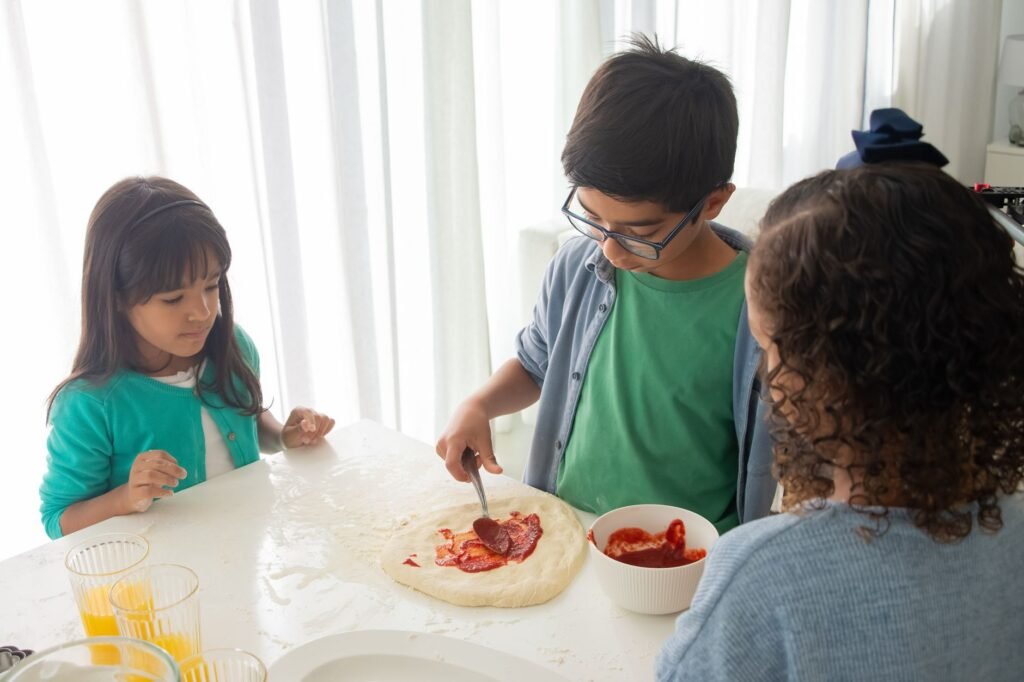
Children who help prepare food are often more willing to taste it. Even young kids can wash vegetables, stir sauces, tear lettuce or sprinkle cheese. Older children can measure ingredients, follow simple recipes and help plan the weekly menu. Involving kids builds skills, confidence and a positive relationship with food. Our guide to building confidence in kids explains why these small responsibilities matter so much.

Planning Weeknight Meals Without Stress
- Plan a simple weekly menu with a rotation of family favorites.
- Batch cook grains, sauces or proteins on the weekend.
- Keep a well-stocked pantry with pasta, rice, canned beans, frozen vegetables and eggs.
- Use theme nights, such as Taco Tuesday or Pizza Friday, to make planning easier.
- Let kids choose one dinner each week from a few options.
Balanced Nutrition for Growing Kids
Aim to include a variety of food groups across the day rather than worrying about every meal. Look for vegetables, fruit, whole grains, protein and dairy or calcium-rich alternatives. The MyPlate guidance for kids offers simple ideas for building balanced plates. If you are concerned about specific nutrients, such as iron or vitamin D, talk with your pediatrician.
What About Dessert?
Using dessert as a reward can make sweets seem more desirable and vegetables less so. Some families serve a small dessert with the meal occasionally, with no conditions attached. Others keep treats separate from dinner entirely. Either way, try not to link dessert to finishing vegetables.
Picky Eating and Toddlers
Toddlers are famously unpredictable eaters, loving a food one day and refusing it the next. This is normal and often linked to their growing independence. Our guide to toddler tantrums has tips for handling mealtime meltdowns calmly.
Snacks That Support Better Dinners
What happens between meals affects what happens at dinner. A child who snacks all afternoon may not be hungry when the family sits down. Try offering a planned snack about two to three hours before dinner, then closing the kitchen until mealtime. Choose snacks that combine two food groups, such as apple slices with cheese, yogurt with berries, whole grain crackers with hummus or a banana with a glass of milk. Water between meals is best, as milk and juice can fill small stomachs quickly.
Food Safety With Young Children
Young children are more likely to choke on certain foods. For children under about 4, cut round foods such as grapes and cherry tomatoes into quarters lengthwise, slice sausages into thin strips rather than coins, avoid whole nuts, and cook hard vegetables until soft. Always supervise children while they eat, and have them sit down at the table rather than eat while walking or playing.
When One Parent Is More Adventurous Than the Other
Families often include adults with very different tastes. Try to present a united approach at the table, avoiding negative comments about foods even if you do not personally enjoy them. Children quickly pick up on adult attitudes, so a simple “That is not my favorite, but I like trying it” sets a helpful example. Taking turns choosing family dinners gives everyone a voice.
Trusted sources: Common Sense Media.
Making Vegetables More Appealing
Vegetables are often the hardest sell for picky eaters, partly because many have bitter notes that children are more sensitive to. A few simple tricks can make them more inviting.
- Roast them. Roasting caramelizes natural sugars, making vegetables like carrots, sweet potatoes, cauliflower and Brussels sprouts sweeter and crispier.
- Serve them raw. Many children prefer crunchy raw vegetables, such as cucumber, peppers and snap peas, to soft cooked ones.
- Add a dip. Hummus, yogurt dip, guacamole or a mild dressing makes vegetables more fun to eat.
- Offer them first. Put out a plate of vegetable sticks while you finish cooking, when kids are at their hungriest.
- Grow something together. Even a pot of cherry tomatoes or herbs on a windowsill can spark curiosity about eating what you grew.
- Keep offering without pressure. A vegetable left untouched tonight may be tried next week.
Eating Out With a Picky Eater
Restaurants can be tricky when kids’ menus are limited or your child refuses everything. Look at menus ahead of time, order sides your child already likes, and consider sharing adult dishes so your child can taste new flavors without committing to a whole plate. Bringing a small, familiar snack for emergencies is fine, but try to let your child explore the meal first.
Keeping Perspective
It helps to look at what your child eats over a whole week rather than a single meal. Many picky eaters balance out surprisingly well over several days, eating more on some days and less on others. If your child is growing well and has plenty of energy, you are likely doing better than you think.
Frequently Asked Questions
Should I hide vegetables in my child’s food?
Adding vegetables to sauces and baked goods is a fine way to boost nutrition, but also serve vegetables openly so your child learns to recognize and accept them.
Is it okay if my child only eats a few foods for a while?
Short phases are common. Keep offering variety without pressure. If the list keeps shrinking or growth is affected, talk to your pediatrician.
How many times should I offer a new food?
Many children need 10 to 15 or more exposures before accepting a new food. Keep offering small amounts alongside familiar foods.
Should I make a separate meal for my picky eater?
It is usually better to serve one family meal that includes at least one food your child accepts, rather than cooking to order.
The Bottom Line
Easy weeknight dinners for picky eaters work best when everyone can build their own plate and find at least one familiar food. Serve balanced family meals, offer new foods in small portions, keep the mood relaxed and let children decide how much to eat. With patience and repeated, pressure-free exposure, most picky eaters gradually expand their tastes, and dinnertime becomes something the whole family can enjoy.
Was this article helpful?
Thanks for letting us know! Your feedback helps us make our articles better.

Writer at Apparently a Parent, covering the everyday joys and challenges of raising a family.