9 Everyday Ways to Build Confidence in Kids That Work
Learn 9 everyday ways to build confidence in kids, from chores and problem solving to praising effort, plus tips for setbacks and comparison.


In this article
Key takeaways
- Confidence is built through everyday experiences of trying and succeeding.
- Praise effort and strategy rather than only results or intelligence.
- Let children solve problems and learn from safe mistakes.
- One-on-one time helps children feel secure and valued.
Between the ages of about 5 and 10, children start comparing themselves with others, facing new challenges at school and figuring out what they are good at. It is a time of huge growth, and also of wobbles. One day your child feels on top of the world, the next they declare that they are bad at everything.
Confidence is not something children either have or lack. It is built, little by little, through everyday experiences of trying, struggling, succeeding and sometimes failing in a safe, supportive environment. As a parent, you have countless opportunities each day to help your child build confidence that lasts.
This guide shares nine everyday ways to build confidence in kids, explains the difference between confidence and praise, and offers tips for handling setbacks, comparison and anxiety. These ideas work best for school-age children, though many can be adapted for younger and older kids too.
What Real Confidence Looks Like
Healthy confidence is not about believing you are the best at everything. It is a quiet sense that you can handle challenges, learn new things and bounce back when things go wrong. Psychologists often describe it in terms of self-efficacy, the belief that your efforts make a difference.
Confident children are willing to try new things, ask for help, make mistakes and keep going. They also tend to feel secure in their relationships, knowing they are loved for who they are, not only for what they achieve.
The 9 Everyday Ways to Build Confidence in Kids
1. Give age-appropriate responsibilities
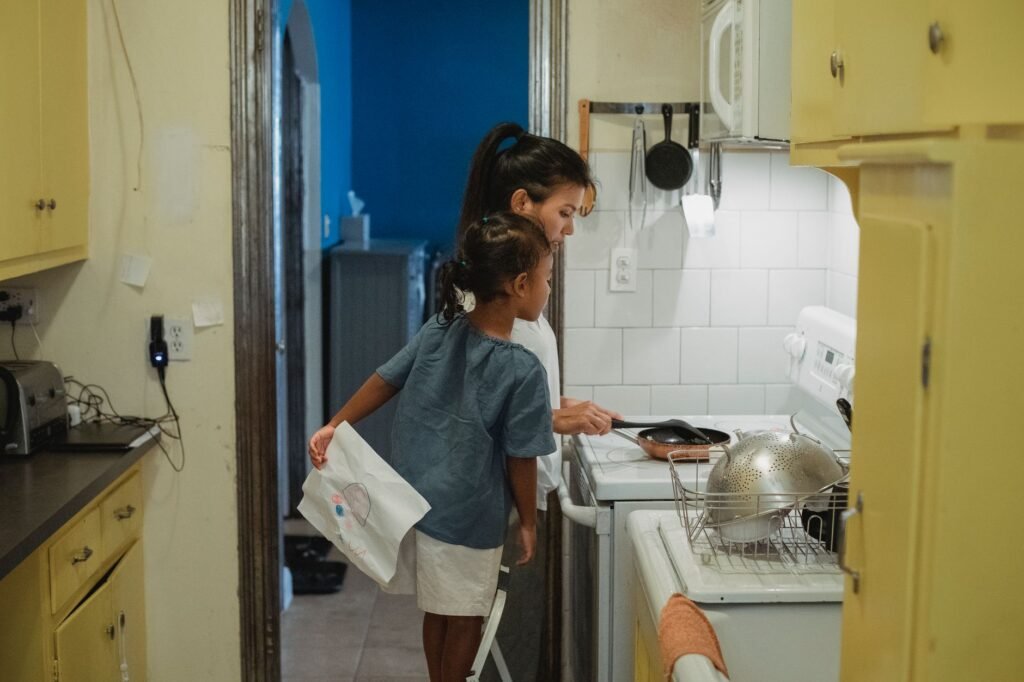
Children feel capable when they contribute. Chores such as setting the table, feeding a pet, packing their own school bag or helping cook dinner send a powerful message: we trust you, and your contribution matters. Start small and build up as your child grows.
- Ages 5 to 6: tidy toys, set the table, water plants
- Ages 7 to 8: make their bed, help with laundry, pack lunch with support
- Ages 9 to 10: prepare simple snacks, take out recycling, help plan a family meal
2. Let them solve problems first
When your child faces a small challenge, such as a tricky puzzle or a disagreement with a friend, resist the urge to fix it immediately. Ask, “What do you think you could try?” Coaching rather than rescuing helps children build problem-solving skills and the confidence that comes with them.
3. Allow safe mistakes
Mistakes are how children learn. When your child forgets their homework or loses a game, the natural disappointment teaches lessons no lecture can. Offer empathy, help them think about what they might do differently next time and let them see that mistakes are survivable.
4. Praise effort and strategy, not just results
Research on growth mindset suggests that praising effort, strategies and persistence helps children embrace challenges. Instead of “You are so smart,” try “You worked really hard on that” or “I noticed you tried a new way when the first one did not work.”
5. Share your own mistakes and what you learned
Children learn a lot from watching how adults handle setbacks. Talk about times you struggled, what you felt and how you kept going. Hearing that parents make mistakes helps children see imperfection as normal.
6. Celebrate progress, not perfection
Help your child notice how far they have come. Compare their current skills with their own past skills rather than with other children. “Remember when you could only swim a few strokes? Look at you now!”
7. Follow their curiosity
Confidence grows when children do things they genuinely enjoy. Pay attention to what lights your child up, whether it is drawing, building, dancing, nature, science or sports, and give them chances to explore it. Mastering something they love builds a deep sense of competence.
8. Give real choices
Letting children make meaningful decisions, such as what to wear, which activity to try or how to spend a free afternoon, shows that you respect their judgment. Choices within limits teach decision-making and responsibility.
9. Spend one-on-one time together
Few things build a child’s sense of worth like undivided attention. Even 10 to 15 minutes a day of child-led play or conversation, with phones away, tells your child that they matter. That security is the foundation of confidence.
| Instead of saying | Try saying |
|---|---|
| You are so smart! | You worked hard to figure that out. |
| Let me do it. | What could you try next? |
| Do not worry, it is easy. | This is tricky, and you can take it step by step. |
| Why can’t you be more like your sister? | Look how much you have improved since last month. |
| Great job! | You kept going even when it got hard. That is great. |
Handling Setbacks and Disappointment
Every child experiences disappointment, from losing a match to not being invited to a party. How you respond helps shape how they see themselves.
- Listen first. Let your child share their feelings before offering solutions.
- Validate emotions. “It makes sense that you feel upset. You really wanted to win.”
- Avoid rushing to fix it. Sometimes children just need to feel heard.
- Help them reflect. When calmer, ask what they learned and what they might try next time.
- Keep perspective. Remind them of other things they are good at and people who love them.
Dealing With Comparison
School-age children naturally compare themselves with classmates and siblings. You cannot stop it completely, but you can help your child keep it in perspective. Encourage them to focus on their own progress, talk about how everyone has different strengths and avoid comparing siblings out loud. Point out that people learn at different speeds and that being good at something often takes time and practice.

Building Confidence at School
School is where many children’s confidence is tested most. You can support them from home.
- Show interest in what they are learning, not just grades.
- Create a calm homework routine and space. Our guide to talking so kids will listen offers tips that work for younger children too.
- Encourage them to ask teachers questions and speak up about what they need.
- Help with organization skills, such as using a planner or checklist.
- Stay in touch with teachers so you can work together if your child is struggling.
Friendships and Social Confidence
Social skills are a big part of confidence at this age. Help your child practice introducing themselves, joining in play and handling conflicts. Role-playing at home can help shy children feel more prepared. Arranging playdates with one friend at a time can be less overwhelming than large groups. Remember that introverted children can be very confident. They simply recharge differently.

Activities That Build Confidence
- Team sports: teach cooperation, resilience and handling wins and losses.
- Creative arts: drawing, music, dance and drama encourage self-expression.
- Building and making: LEGO, crafts and simple woodworking show children they can create things.
- Outdoor adventures: climbing, hiking and camping help children test their limits safely.
- Cooking: following a recipe and sharing the result with the family is deeply satisfying.
- Volunteering: helping others builds a sense of purpose and capability.
Looking for activity ideas? Our list of rainy day activities for kids includes plenty of confidence-building projects.
Modeling Confidence Yourself
Children watch how you talk about yourself. If you often criticize your own looks or abilities, they learn that habit too. Try to speak kindly about yourself, try new things in front of them and show that it is okay to be a beginner. Your example is one of the most powerful lessons they receive.
When Low Confidence Might Be Something More
Most dips in confidence are temporary. Sometimes, though, ongoing low self-esteem can be linked to anxiety, learning differences, bullying or other challenges that need extra support. Resources from the Child Mind Institute and the American Psychological Association can help you understand what your child may be going through.
Confidence at Different Ages
Ages 5 to 7
Children starting school are learning to follow rules, make friends and handle being away from home all day. Confidence at this stage often comes from mastering practical skills, such as zipping a coat, reading a first book or riding a bike. Celebrate these small wins and keep routines predictable so children feel secure while they stretch their abilities.
Ages 8 to 10
Older primary school children become more aware of how they compare with peers, in schoolwork, sports and friendships. They benefit from chances to develop real competence in something they care about and from conversations that help them understand that everyone has strengths and weaknesses. This is also a great age to give more independence, such as walking to a friend’s house or managing a small allowance.
Heading into the tween years
As children approach puberty, body changes and social pressures can shake confidence. Keep communication open, talk about media images and online life, and continue to show interest in their world. Your steady support becomes even more important, even if they seem to want less of it.
Confidence and Body Image
Children absorb messages about bodies from an early age. Help your child build a healthy body image by focusing on what their body can do, such as running, climbing, dancing and hugging, rather than how it looks. Avoid commenting negatively on your own or others’ appearance, and talk about food in terms of energy and health rather than good and bad. If your child expresses worries about their weight or looks, listen calmly and talk with their pediatrician if concerns persist.
Screens, Social Media and Self-Esteem
Even young children see curated images and videos that can make real life feel less exciting. Watch content together when you can, talk about how online images are edited and chosen, and keep screens out of bedrooms at night. Encourage offline activities where your child can feel skilled and connected. Our guide to screen time rules for families offers practical ideas for balance.
Resilience: Confidence’s Close Cousin
Resilience is the ability to bounce back from difficulty, and it grows alongside confidence. Children build resilience when they face manageable challenges with support, see adults cope with stress calmly and have strong relationships to lean on. Letting your child experience small frustrations, rather than removing every obstacle, gives them the chance to discover that they can cope. Each time they do, their belief in themselves grows a little stronger.
A Simple Weekly Confidence Routine
Small, repeated habits make the biggest difference. Try a simple weekly rhythm: give your child one new responsibility, set aside a few one-on-one sessions, notice and name one example of perseverance each day, and end the week by talking about something they learned or improved. Over months, these moments add up to a child who believes in themselves.
Frequently Asked Questions
Can too much praise hurt confidence?
Constant, general praise can make children rely on approval or fear failing. Specific praise for effort and strategy is more helpful.
How do I help a shy child become more confident?
Respect their temperament, prepare them for new situations, practice social skills at home and celebrate small brave steps.
Should I let my child quit an activity?
Encourage them to finish a season or term when possible, which teaches commitment. After that, it is fine to try something new that suits them better.
Is it too late to build confidence in an older child?
Never. Confidence can grow at any age with support, practice and positive experiences.
The Bottom Line
You can build confidence in kids through everyday moments: giving responsibilities, letting them solve problems, allowing safe mistakes, praising effort, sharing your own struggles, celebrating progress, following their interests, offering choices and spending one-on-one time together. Confidence grows from feeling capable and loved. With patience and encouragement, your child will learn that they can handle whatever comes their way.
Was this article helpful?
Thanks for letting us know! Your feedback helps us make our articles better.

Writer at Apparently a Parent, covering the everyday joys and challenges of raising a family.