Car Seat Stages: Which Seat Does My Child Need Now?
Understand car seat stages from rear-facing to booster and seat belt, when to move up, how to install seats correctly and common mistakes to avoid.


In this article
Key takeaways
- Keep children rear-facing until they reach the seat's rear-facing limits.
- Use a forward-facing harness, then a booster until the seat belt fits.
- Children under 13 should ride in the back seat.
- Install tightly, keep harnesses snug and skip bulky coats.
Few pieces of baby gear matter as much as a car seat. Used correctly, car seats dramatically reduce the risk of serious injury and death in a crash. Yet studies of car seat checks consistently find that many seats are installed or used incorrectly, often in small ways that parents never notice.
Understanding the car seat stages, and when to move from one to the next, takes much of the guesswork out of keeping your child safe. The key message from child passenger safety experts is simple: keep your child in each stage for as long as possible, until they reach the maximum height or weight allowed by their seat.
This guide explains each car seat stage from birth to the teen years, how to install and use seats correctly, common mistakes to avoid and where to get a free safety check. Laws and standards vary between countries and states, so always check your local rules and your seat’s manual.
The Four Car Seat Stages at a Glance
| Stage | Seat type | Typical age range | Move on when |
|---|---|---|---|
| 1 | Rear-facing (infant or convertible) | Birth to at least 2, often longer | Child reaches the seat’s rear-facing height or weight limit |
| 2 | Forward-facing with harness | Often from about 2 to 4 years until 5 or older | Child reaches the harness height or weight limit |
| 3 | Belt-positioning booster | Often about 5 to 12 years | The adult seat belt fits properly, usually around 4 feet 9 inches |
| 4 | Adult seat belt | When the belt fits | Ride in the back seat until age 13 |
Ages are only a rough guide. Your child’s height and weight, and your seat’s limits, are what decide when to move up.

Stage 1: Rear-Facing Car Seats
Rear-facing seats protect a young child’s head, neck and spine by spreading crash forces across the whole back of the seat. Young children’s heads are large and heavy compared with their bodies, and their neck and spine are still developing, which makes rear-facing especially protective.
Infant seats
Infant car seats are rear-facing only and usually click into a base that stays in the car. They are convenient for carrying a sleeping baby, but most children outgrow them within the first year. Check both the weight and height limits. Many seats are outgrown by height first, often when there is less than an inch between the top of your baby’s head and the top of the shell.
Convertible and all-in-one seats
Convertible seats can be used rear-facing and later forward-facing. Many have higher rear-facing limits than infant seats, allowing children to stay rear-facing well past their second birthday. The American Academy of Pediatrics recommends keeping children rear-facing as long as possible, until they reach the highest weight or height allowed by the seat.
What about bent legs?
Parents often worry when a toddler’s legs touch the back seat. Children are flexible and comfortable sitting cross-legged or with bent knees, and leg injuries are rare in rear-facing children. It is not a reason to turn them forward-facing early.
Stage 2: Forward-Facing With a Harness
Once your child outgrows the rear-facing limits, move to a forward-facing seat with a five-point harness. The harness spreads crash forces across the strongest parts of the body and keeps your child in position.
- Always use the top tether strap. It reduces how far your child’s head moves forward in a crash.
- Keep your child in the harness until they reach the seat’s maximum weight or height. Many harnessed seats now accommodate children up to 65 pounds or more.
- Check that your child’s shoulders are below the top harness slots.
Stage 3: Belt-Positioning Booster Seats
Boosters raise your child so the adult seat belt fits correctly across the strong bones of the body. Without a booster, the lap belt can ride up over the stomach and the shoulder belt can cut across the neck, leading to serious injuries.
Is your child ready for a booster?
- They have outgrown their harnessed seat.
- They can sit properly for the whole ride without slouching, leaning or playing with the belt.
- They are mature enough to stay in position, even when asleep.
High-back versus backless boosters
High-back boosters provide head support and help position the shoulder belt, especially in cars without headrests. Backless boosters are portable and useful for older children when the vehicle seat provides head support.
Stage 4: Using the Adult Seat Belt
Most children need a booster until they are about 4 feet 9 inches (145 centimeters) tall, often between ages 8 and 12. Use this five-step test to check whether the seat belt fits without a booster.
- Your child can sit all the way back against the vehicle seat.
- Their knees bend comfortably at the edge of the seat.
- The lap belt lies low across the upper thighs, not the stomach.
- The shoulder belt crosses the middle of the chest and shoulder, not the neck or face.
- They can stay seated this way for the whole trip.
If any answer is no, your child still needs a booster. All children under 13 should ride in the back seat, which is the safest place in the vehicle.
Installing Your Car Seat Correctly
Choose one installation method
Install the seat with either the lower anchor system (called LATCH or ISOFIX in different places) or the vehicle seat belt, not both, unless your seat’s manual says otherwise. Check weight limits for lower anchors, which usually include the weight of the seat itself.
The one-inch test
Once installed, hold the seat at the belt path and try to move it side to side and front to back. It should not move more than one inch.
Check the recline angle
Rear-facing seats need the correct recline so a baby’s head does not flop forward and block the airway. Most seats have an angle indicator to guide you.
Buckling Your Child in Safely
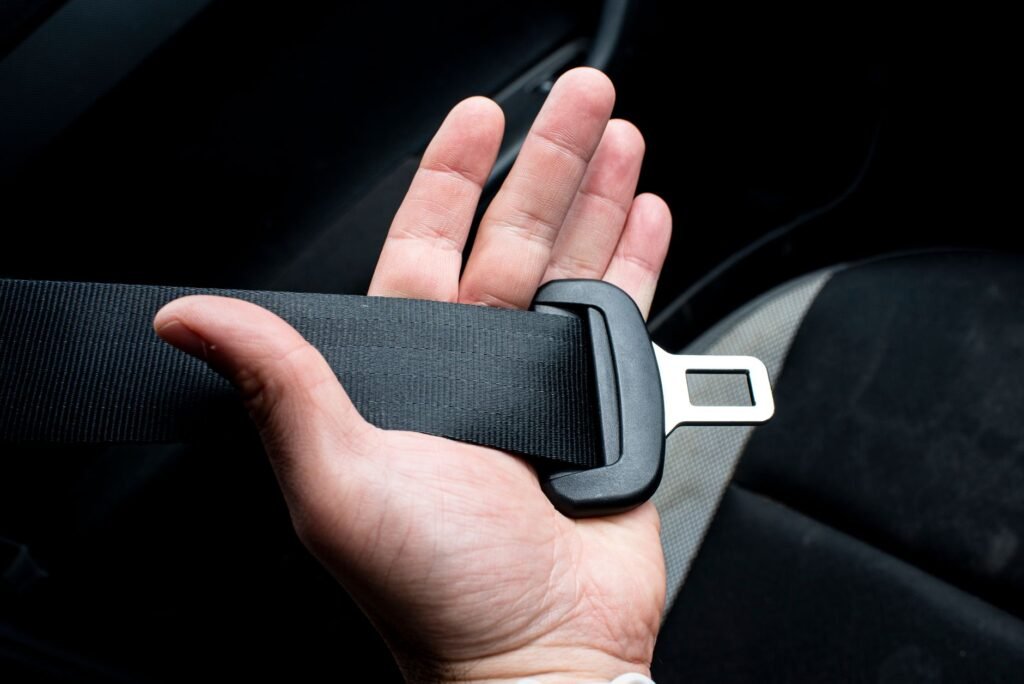
- Harness height: for rear-facing seats, straps should come from at or below your child’s shoulders. For forward-facing seats, at or above the shoulders.
- Snug fit: after tightening, try to pinch the harness strap at your child’s collarbone. If you can pinch a fold of webbing, tighten further.
- Chest clip: position it at armpit level.
- No bulky coats: puffy coats and snowsuits compress in a crash, leaving the harness too loose. Buckle your child in regular clothes and lay a blanket or coat over the harness.
- No aftermarket products: avoid inserts, strap covers or toys not made by your seat’s manufacturer.

Common Car Seat Mistakes
- Turning a child forward-facing too early
- Moving to a booster before the child is big enough or mature enough
- Loose installation that fails the one-inch test
- Loose harness straps or a chest clip that sits too low
- Using a seat that is expired or has been in a crash
- Forgetting the top tether on forward-facing seats
Buying a Car Seat
All car seats sold legally must meet safety standards, so a higher price does not always mean a safer seat. The best seat is one that fits your child, fits your vehicle and that you can install and use correctly every time.
- Check expiration dates. Seats usually expire several years after manufacture because materials degrade.
- Be cautious with secondhand seats. Only use one if you know its full history, it has never been in a crash, it is not expired, it has all its parts and it has not been recalled.
- Register your seat with the manufacturer so you are notified of any recalls.
Planning your baby gear? Our baby registry checklist and guide to choosing a stroller cover travel systems that pair seats and strollers.
After a Crash
Many manufacturers recommend replacing a car seat after any crash, while some guidelines allow continued use after a very minor crash that meets specific criteria. Check your seat’s manual and, when in doubt, replace it. Many insurance companies cover the cost.
Car Seats and Sleep
Car seats are designed for travel, not sleep outside the car. If your baby falls asleep in the car seat, move them to a flat, safe sleep surface once you arrive. Our safe sleep guide explains why.
Get a Free Car Seat Check
Certified child passenger safety technicians can check your installation and teach you how to use your seat correctly. Many fire stations, hospitals and community organizations offer free checks. Safe Kids Worldwide runs car seat inspection events, and the American Academy of Pediatrics’ HealthyChildren.org publishes an updated car seat guide each year.
Travel, Taxis and Rideshares
Children need the right car seat on every ride, including taxis, rideshares and rental cars. For babies and toddlers, a lightweight convertible seat or infant seat that installs with a seat belt can make travel easier. For older kids, portable boosters are compact and easy to carry. If you are flying, many car seats are approved for use on aircraft, which keeps your child safer during turbulence and means you have a familiar seat at your destination. Check the label on your seat and your airline’s rules before you go. Our guide to road trips with kids has more tips for travel days.
Keeping Kids Comfortable and Cooperative
Some children protest being buckled in, especially toddlers who want independence. Stay calm and consistent: the car does not move until everyone is buckled. Offer choices where you can, such as which toy to hold or which song to play. Praise your child for climbing in and helping with the buckle. Older children can learn why car seats matter, which helps them take pride in riding safely.
Car Seats for Premature and Small Babies
Babies born early or at a low birth weight may need extra care in the car. Many hospitals perform a car seat challenge before discharge, watching the baby’s breathing and oxygen levels while they sit in their car seat. Choose an infant seat with a low minimum weight rating, and use only the inserts that came with your seat. Keep journeys short in the early weeks, and have an adult sit in the back to watch the baby when possible.
Multiple Children and Three Across
Families with several young children often need to fit multiple car seats in one row. Narrow seats designed for three-across installations can help, and some vehicles fit certain seat combinations better than others. Before buying, check the width of each seat and test the fit in your vehicle if you can. Remember that every child still needs the right seat for their size, even when space is tight.
Frequently Asked Questions
When can my child face forward?
Keep your child rear-facing until they reach the rear-facing height or weight limit of their convertible seat. For many children, that is well past age 2.
When can my child stop using a booster?
When the adult seat belt fits properly using the five-step test, usually around 4 feet 9 inches tall and between ages 8 and 12.
When can my child sit in the front seat?
Experts recommend children ride in the back seat until age 13.
Do car seats really expire?
Yes. Plastic and other materials can weaken over time. Look for the expiration date on the label or molded into the seat.
The Bottom Line
Car seat stages follow your child’s growth: rear-facing as long as possible, then forward-facing with a harness, then a booster until the seat belt fits, and the back seat until age 13. Install your seat tightly, keep the harness snug, avoid bulky coats and get a free check from a certified technician. These simple steps, repeated on every ride, are one of the most important ways to protect your child.
Was this article helpful?
Thanks for letting us know! Your feedback helps us make our articles better.

Writer at Apparently a Parent, covering the everyday joys and challenges of raising a family.